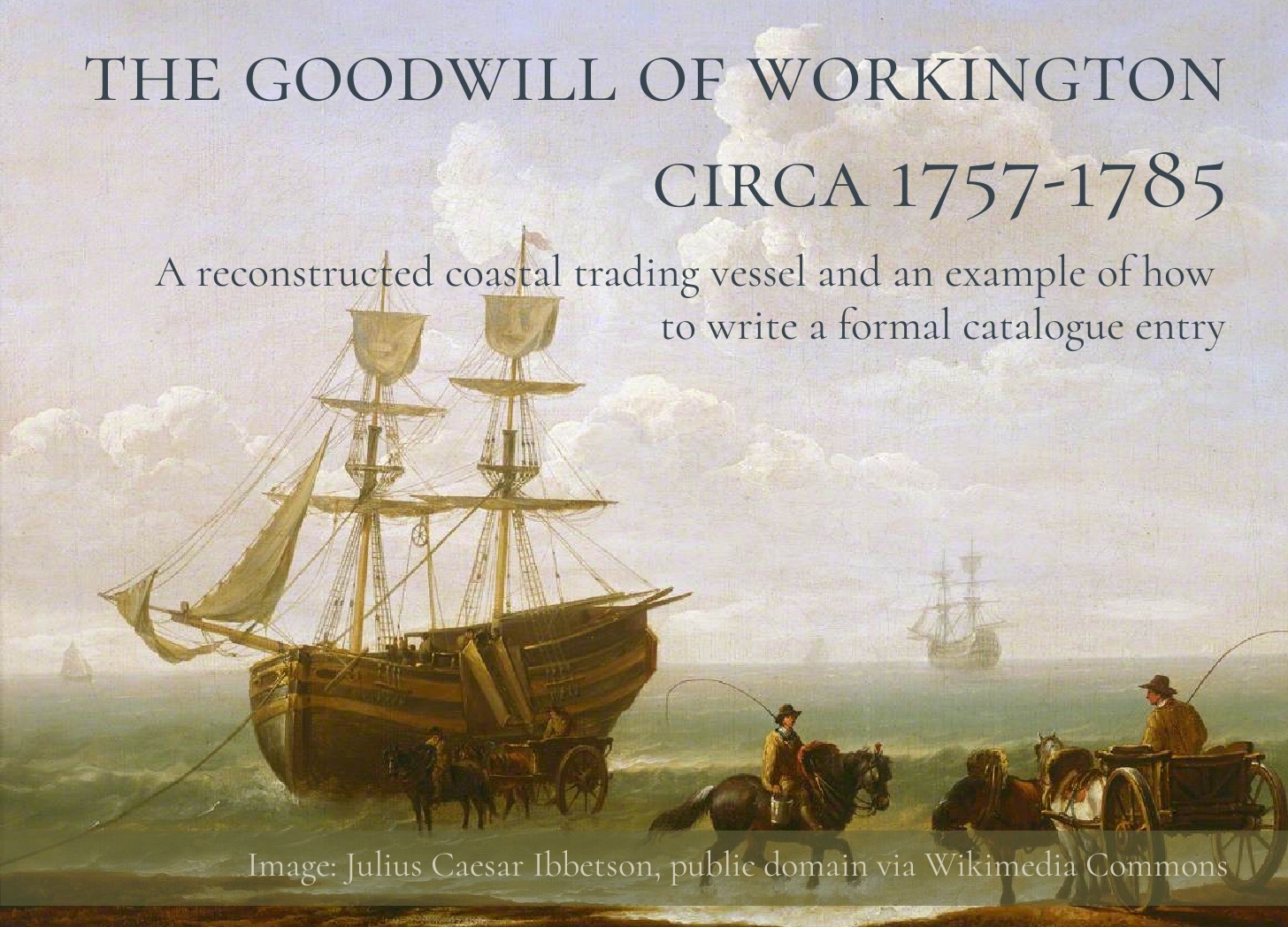
A reconstructed coastal trading vessel and an example of how to write a formal catalogue entry
What is a Reconstructed Object in an Archive?
Ships, working lives, businesses and even whole communities often leave behind scattered traces rather than one complete record. A reconstructed object is something that once existed but no longer survives as a single physical item in an archive. Instead, it is known through multiple, separate references found in different documents.
For example, a ship may appear in a newspaper arrival list, in a report of a capture or wreck, in an advertisement, or mentioned incidentally in a marriage notice or legal report. No logbook, register, or ownership paper may survive. Yet when these references clearly point to the same ship, historians can reasonably say: this vessel existed, moved, worked and mattered.
By bringing those references together, the ship becomes a reconstructed object. The object itself is not preserved, but its outline can be rebuilt from evidence. This approach is not guesswork. It relies on: repeated mentions over time, consistent names and places and attention to what the sources actually say. Calling something a reconstructed object is a way of being honest with readers. It tells them: the history is real, the sources are genuine, but the object is known only through surviving fragments.
Many ordinary but important things from the past - working ships, labourers’ lives, small businesses - survive only in this way. Reconstructing them allows community archives to preserve histories that might otherwise disappear entirely.
GOODWILL of Workington
Merchant vessel Date: c.1757–1785
Level of description: Item (reconstructed subject)
Description:
References to the merchant vessel Goodwill of Workington, engaged in Irish Sea coastal trade during the mid to late eighteenth century.
The vessel is recorded in newspaper shipping intelligence as operating between west Cumberland and Irish ports, including Belfast, Limerick, Cork, and Kinsale. Early references indicate the carriage of coal; later reports include the transport of government provisions.
The vessel is consistently associated with a master surnamed Fearon. In January 1781, during the American War of Independence, the Goodwill, under Capt. Fearon and carrying King’s provisions from Limerick to Cork, was captured by French privateers and subsequently ransomed. Later reports from July 1781 record the vessel sailing in company near the Saltee Islands and escaping pursuit by a privateer while bound for Kinsale. These notices indicate that the vessel returned to service following ransom and continued trading during wartime conditions.
The Goodwill remained in operation into the mid-1780s.
A marriage notice reported in December 1785 states that Joseph Thompson, described as mate of the Goodwill of Workington, married Bella Fearon, daughter of Mr Fearon of Gilcrux, indicating the vessel’s integration into local maritime communities.
Covering dates: 1757–1785
Physical description: Not applicable (described from secondary sources)
Related material: British Newspaper Archive: shipping intelligence, wartime reports, and marriage notices published in Irish and Cumbrian newspapers.
Administrative / biographical background: Workington was an established coal-exporting port during the eighteenth century, with regular Irish Sea trade. Coastal merchant vessels such as the Goodwill commonly had long working lives and were embedded in local economic and family networks.
Notes: All references derive from contemporary newspaper reports accessed via the British Newspaper Archive. The surname Fearon was common in west Cumberland; no documentary evidence has been identified to confirm a familial relationship between the master of the vessel and the Gilcrux Fearon family.